
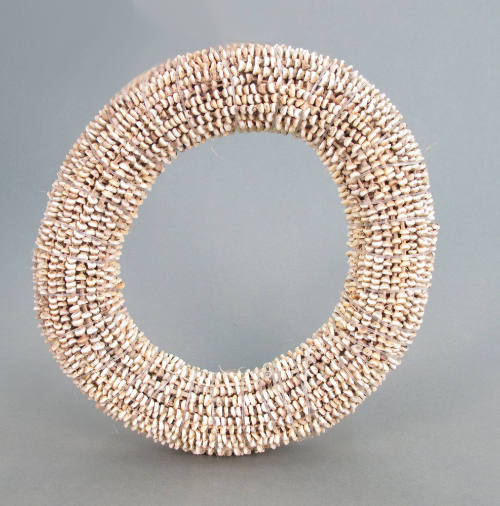
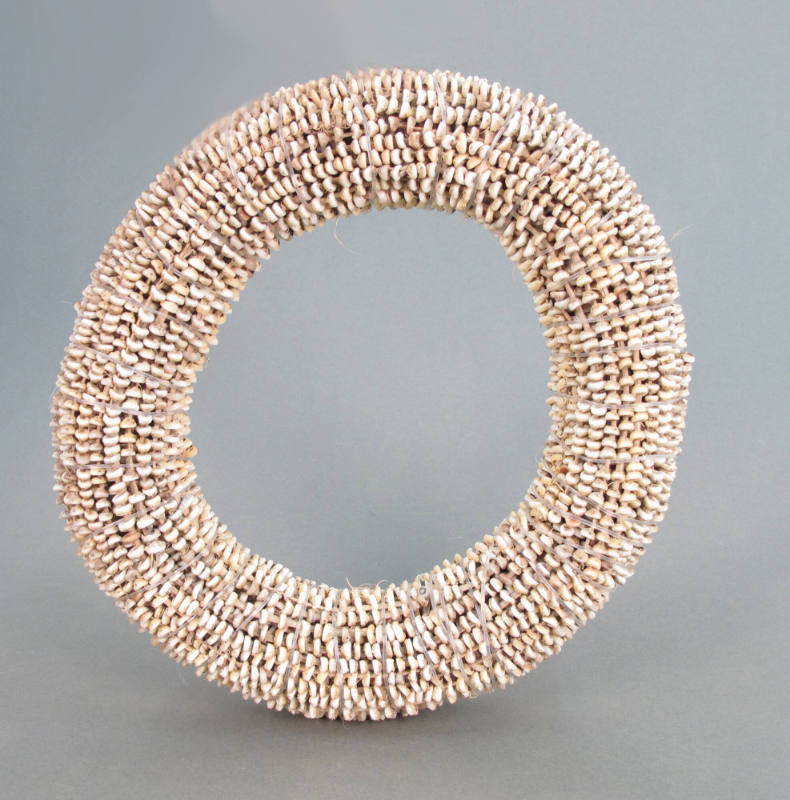
Currency (Tabu)
ClassificationsCurrency and Exchange Objects
Culturepossibly
Tolai
Date20th Century
Collection SiteEast New Britain Province, Papua New Guinea
Made AtEast New Britain Province, Papua New Guinea
MediumNassa shell, plant fiber, monofilament
Dimensions11 3/8 × 10 5/8 × 2 3/8 in., 51.2 oz. (28.9 × 27 × 6 cm, 1.451 kg.)
In Mount: 14 1/4 × 11 7/8 × 4 in. (36.2 × 30.2 × 10.2 cm)
In Mount: 14 1/4 × 11 7/8 × 4 in. (36.2 × 30.2 × 10.2 cm)
Credit LineAnonymous Gift
Object number2017.10.127
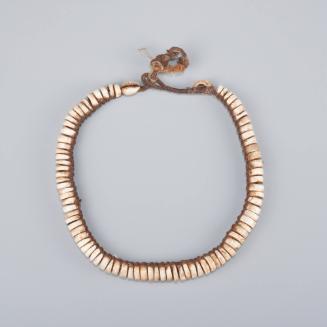
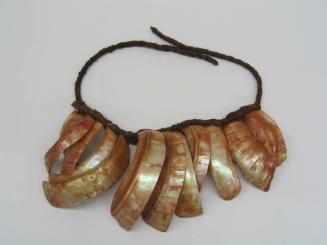
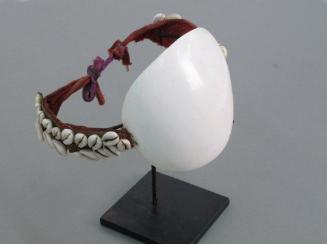
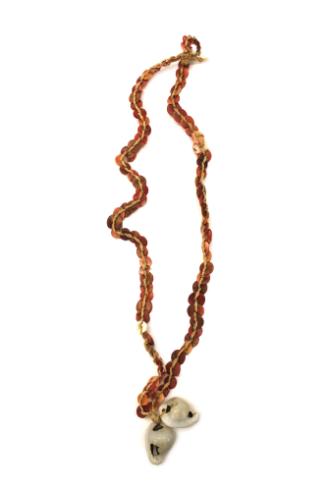
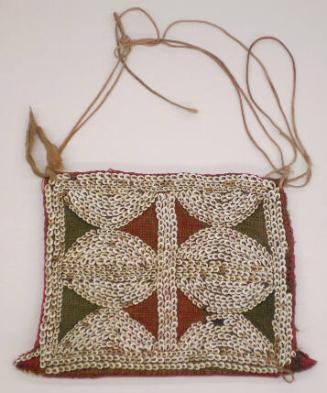
DescriptionThis shell ring currency, also referred to as tabu, was collected from the East New Britain Province of Papua New Guinea. A tabu is constructed from several rings of strung shells. In many Melanesian communities, shells were used as a form of currency and simultaneously as supplies for high-priced ornamentation. As a form of currency, shells were used in trades along the coast and nearby islands. The further distance a shell traveled, the higher their value would increase. Therefore, the price and social value of an adornment increased depending on the inclusion of a well-traveled shell.As a form of adornment, a shell will signify important qualities about the wearer's wealth, initiation level within a clan membership, and ideas of ritual practice. The use of shells as adornments also developed into a reflection of wearer’s individual notions of beauty and attractiveness. In war ornamentation, men use shells as an indicator of societal recognition for their achievements and to convey their view of strength as beauty. Ornamentation satisfies the individual’s personal desire for beautification while allowing for the expression of personality according to social norms.
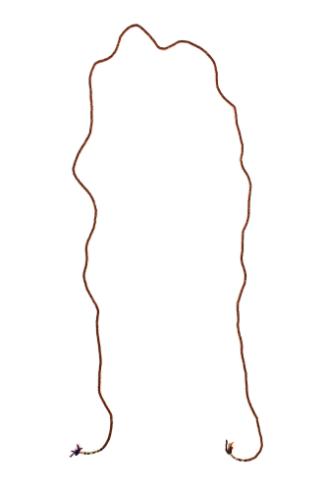
Shell currency rings such as this are constructed from hundreds of meters of strung nassa shells. They are made by the Tolai of East New Britain as an elegant storage solution to an otherwise difficult to store currency. The rings are built up bit by bit over a lifetime, generally through the shells earned from the sale of pigs and other items and can be traded as bride price or other high value commodities. Upon one’s death, they are split amongst relatives and friends. The largest of these rings are made up of between 350 and 550 meters of strung shells.
On View
Not on view
mid 20th Century
late 20th Century
mid 20th Century
mid 20th Century
mid 20th Century

mid 20th Century
mid 20th Century

mid 19th - early 20th Century
mid to late 20th Century
late 19th to early 20th Century