
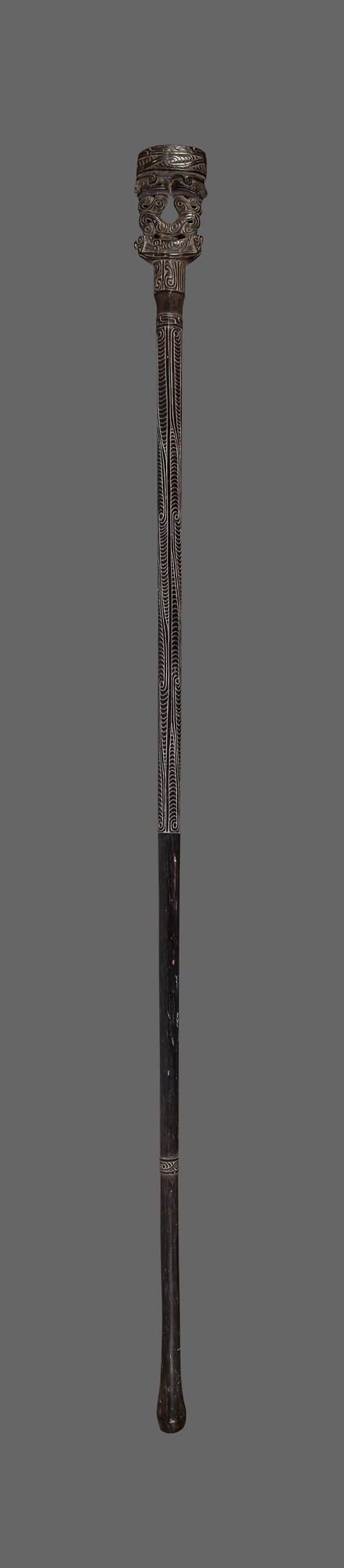

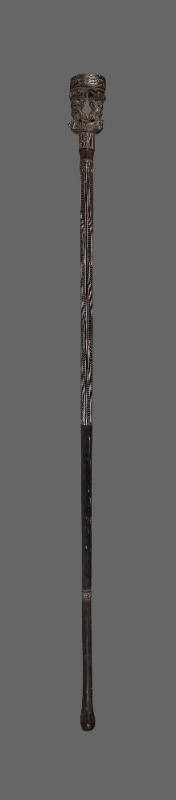
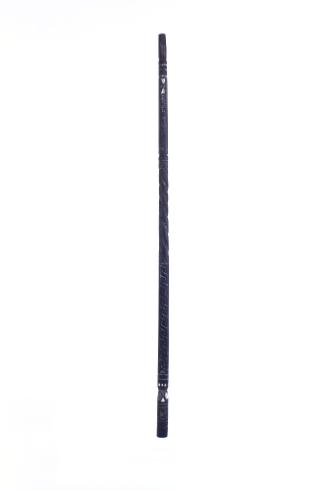
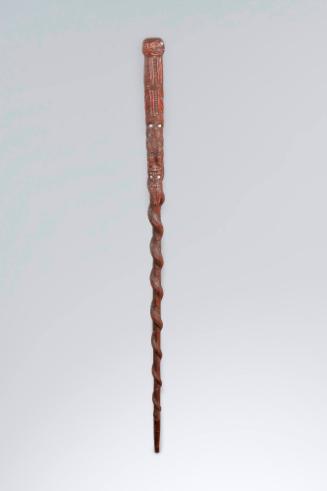
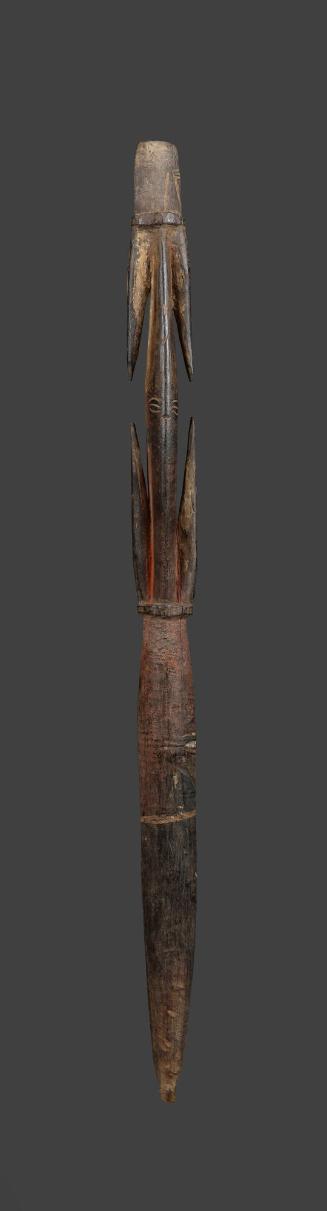
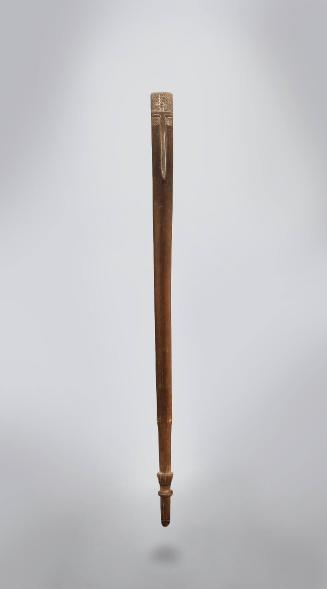
Walking Stick
ClassificationsClothing and Adornments-walking sticks & canes
Culture
Massim
Datelate 19th to early 20th Century
Made AtMilne Bay Province, Papua New Guinea
MediumWood and lime powder
Dimensions43 3/16 × 2 11/16 × 1 1/8 in., 19.2 oz. (109.7 × 6.8 × 2.9 cm, 0.544 kg.)
In Mount: 44 1/8 × 2 11/16 × 1 1/8 in. (112.1 × 6.8 × 2.9 cm)
In Mount: 44 1/8 × 2 11/16 × 1 1/8 in. (112.1 × 6.8 × 2.9 cm)
Credit LineDr. James Block Pick and Dr. Rosalyn M Laudati Fund Purchase
Object number2008.4.1
DescriptionThis walking stick carved with two curved back-to-back figures conveys the prestige of its owner. Walking sticks were used both for the utilitarian purpose of being a walking aid and as symbols of status by the elders of the community. It has been noted that these objects themselves contain powers strong enough to be very dangerous even causing death.On View
Not on viewCollections
20th Century
20th Century
20th Century

late 20th Century
1715
1715
late 19th Century
20th Century
20th Century